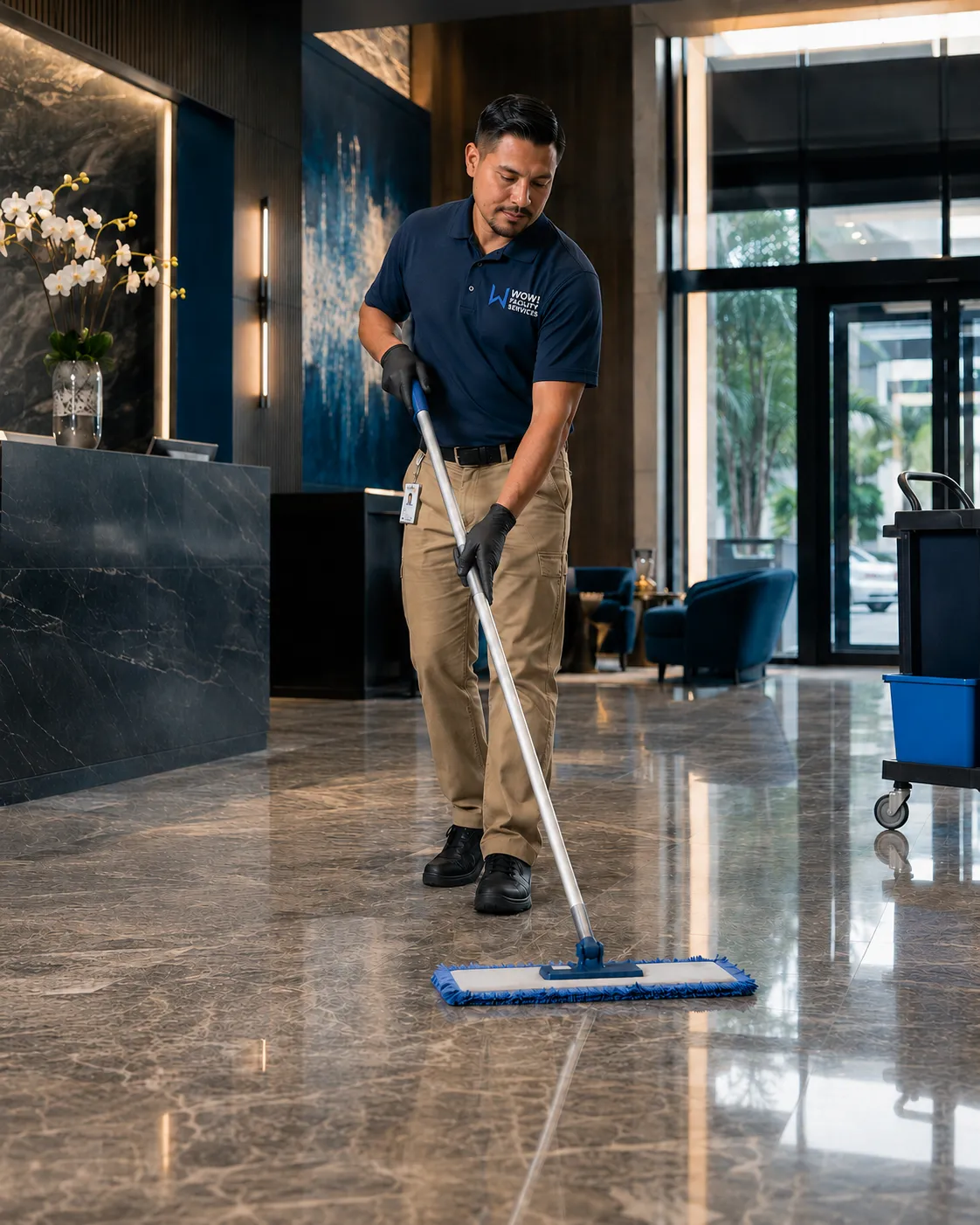
A burst pipe, a chemical spill or a flooded lobby never happens at a good time. When it does, the first hour matters most. Facilities with a clear emergency cleanup plan respond faster, keep people safer and get back to normal sooner.
So here is how to build emergency cleanup procedures that work, and what to expect from the partner who helps you carry them out.
Why You Need Emergency Cleanup Procedures
Spills and leaks create more than a mess. For example, wet floors raise the risk of slips and falls. Meanwhile, water spreads into walls, carpet and ceilings if nobody stops it, and some spills need special handling.
Without a plan, people improvise. As a result, the response is slower, the damage spreads and the cleanup costs more. A written plan turns a stressful moment into a set of known steps.
Five Parts of an Emergency Cleanup Plan
A strong emergency cleanup plan covers five areas.
- Know your risks. List the incidents most likely in your building, such as leaks, floods, spills in labs or kitchens, and storm damage.
- Assign roles. Decide who responds first, who makes decisions and who contacts tenants or residents.
- Stock the right supplies. Keep spill kits, wet floor signs, absorbents, personal protective equipment and wet vacuums where crews can reach them.
- Set up communication. Keep an up to date contact list, including after hours numbers for your cleaning partner, plumber and restoration team.
- Train and practice. Go over the plan with your team, then review it after every real incident.
What to Do in the First Hour
Every incident is different. Still, most emergency cleanup follows the same basic order.
- Make the area safe. Block off the space, post signs and keep people away.
- Stop the source. Shut off water or contain the spill if it is safe to do so.
- Call for help. Bring in the right people for the type of incident.
- Document the scene. Take photos before and during cleanup for your records and any insurance claim.
- Remove water and debris. The sooner you start, the less damage spreads.
After the Emergency Cleanup
Once the immediate problem is handled, the work is not over. Floors, carpet and walls may need drying, deep cleaning or restoration. In addition, it is worth asking what you would do differently next time. Equally important, update the plan with what you learned.
How WOW! Can Help
WOW! Facility Services programs include floor care and deep cleaning that support recovery after an incident. Because our teams already know the buildings we serve, they can help you plan before anything goes wrong.
Every program starts with a facility assessment. Then we build a customized scope of work around your building. Meanwhile, our integrated operational platform technology documents inspections, deficiencies and corrections.
Frequently Asked Questions
What should a spill kit include?
It depends on the risks in your building. However, common items include absorbents, gloves and other protective equipment, disposal bags and wet floor signs.
Do I have to switch vendors after a facility assessment?
No. WOW! offers facility assessments at no cost and with no obligation. In fact, you can use one simply to benchmark your current program.
Which areas does WOW! serve?
WOW! Facility Services has its headquarters in White Plains and serves New York, New Jersey and Connecticut, including Westchester County, Fairfield County, Rockland County and New York City.
Plan Before You Need It
WOW! Facility Services has its headquarters in White Plains and serves New York, New Jersey and Connecticut. Book a facility assessment at no cost and with no obligation, or call 1-866-780-9966. Want a quick benchmark first? Then grade your current service with the Facility Assessment Scorecard.