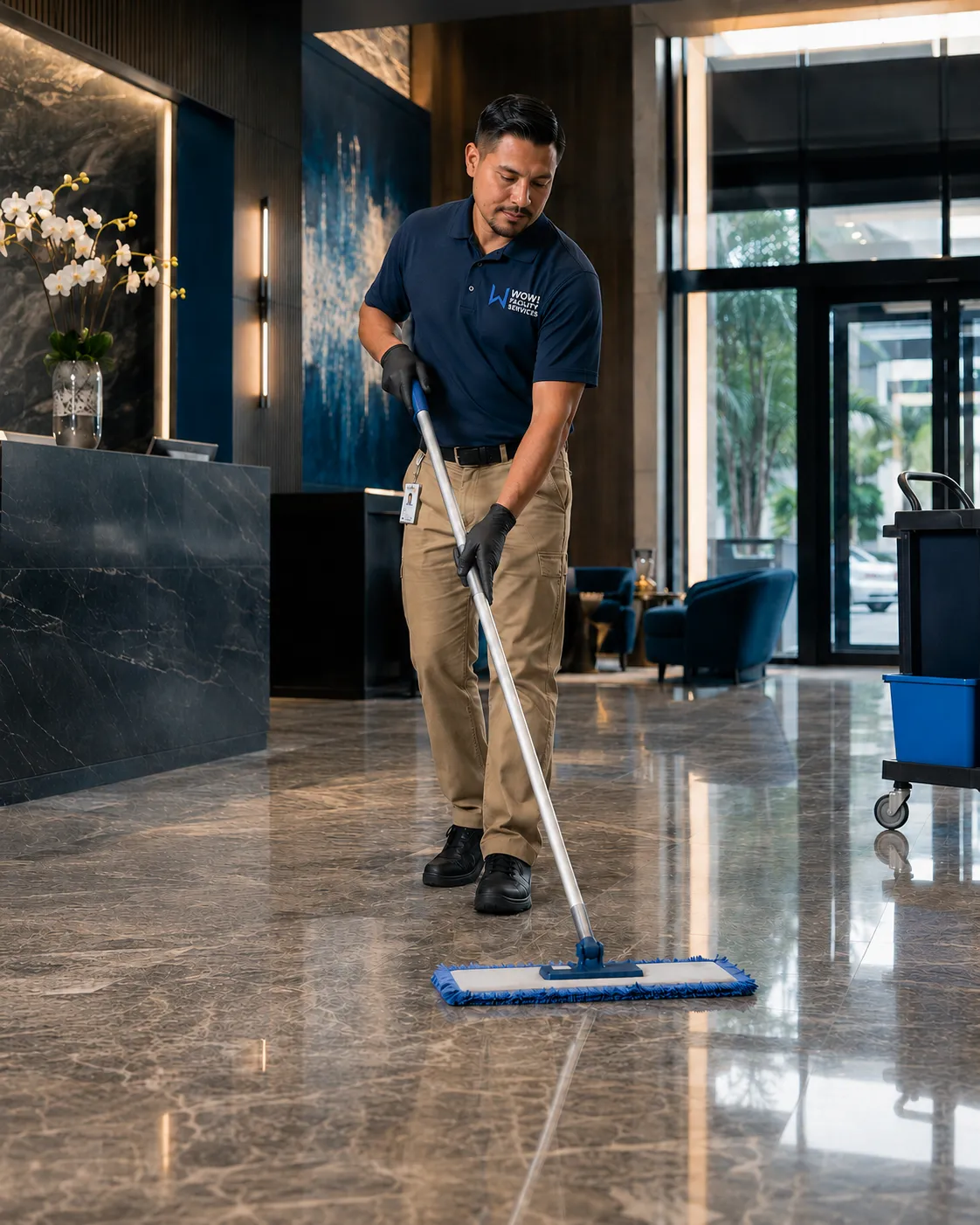
A mop that cleans a restroom floor should never touch a kitchen floor. However, without a clear system, tools travel from one area to another all the time. Color coded cleaning solves that problem with a simple rule: each color belongs to one type of area.
So here is how color coded cleaning works, why it matters and how to set it up in your facility.
What Color Coded Cleaning Is
Simply put, in a color coded cleaning system, cloths, mop heads, buckets and gloves come in different colors. Each color is assigned to a specific type of area. For example, one color might be used only in restrooms, while another is reserved for kitchens and break rooms.
As a result, crews can see at a glance which tools belong where. In other words, the color does the remembering for them.
Why Color Coded Cleaning Matters
First, cross contamination happens when germs move from a dirty area to a clean one. For example, a cloth used on a toilet and then on a break room counter spreads germs. Color coded cleaning reduces that risk by keeping tools in their own zones.
In addition, it makes training easier. New team members, and those who speak different languages, can follow a color system quickly.
How to Set Up Color Coded Cleaning
To begin with, follow these steps to put a color system in place:
- Define your zones. Restrooms, kitchens and break rooms, general offices and common areas, and any special areas such as clinics.
- Assign one color per zone. Keep the chart simple and use it in every building.
- Buy tools to match. Cloths, mop heads, buckets and gloves in each color.
- Post a chart. Put the color chart in every janitor’s closet and on every cart.
- Store tools separately. Keep each color apart, and launder or replace cloths often.
- Train and inspect. Teach the system to every crew member and check it during quality control inspections.
Make Color Coded Cleaning Part of a Bigger System
Still, color coding works best alongside other good habits. For example, clean from cleaner areas to dirtier ones, follow product labels and focus on high touch surfaces. For more, see our guide to cleaning and disinfecting protocols.
How WOW! Prevents Cross Contamination
WOW! Facility Services uses a color coded system as part of its cleaning program. In addition, we build zone based scopes of work and train every team member on site specific procedures, equipment handling and chemical usage.
Every program starts with a facility assessment. Then we build a customized scope of work that defines each zone of your building. Once service begins, account managers complete quality control inspections against that scope. Meanwhile, our integrated operational platform technology documents inspections, deficiencies and corrections.
Frequently Asked Questions
Is there one standard color code for cleaning?
Color schemes vary between organizations. What matters most is that your system is clear, consistent across your buildings and followed by every crew.
Does WOW! use color coded cleaning?
Yes. A color coded system is part of the WOW! cleaning program, so our teams keep tools in the right zones.
Do I have to switch vendors after a facility assessment?
No. WOW! offers facility assessments at no cost and with no obligation. In fact, you can use one simply to benchmark your current program.
Which areas does WOW! serve?
WOW! Facility Services has its headquarters in White Plains and serves New York, New Jersey and Connecticut, including Westchester County, Fairfield County, Rockland County and New York City.
Protect Every Zone of Your Building
WOW! Facility Services has its headquarters in White Plains and serves New York, New Jersey and Connecticut. Book a facility assessment at no cost and with no obligation, or call 1-866-780-9966. Want a quick benchmark first? Then grade your current service with the Facility Assessment Scorecard.